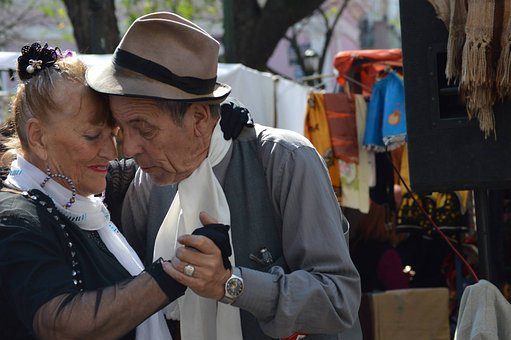
Balanceos are small but important movements in tango. First of all WHY you do them. They ensure you are grounded, that you are together with your partner, the leader knows where the follower’s weight is and makes you in sync with the music.
WHAT it is. So, what is all the fuss about, first of all the meaning in Spanish: balancear – Verb, to ‘balance’ ones partner. So a balanceo means a balance. In Tango it means an active transfer of weight from one foot to the other, usually done from side to side. One’s feet are already close together. Balanceo does not mean rocking or swaying from side to side, but with minimal movement just actively transferring the weight with your feet collected together in parallel.
HOW you do them: The leader initiates the smallest possible movement, simply transferring the partner’s weight from one foot to the other, without moving the feet either from side to side or backwards and forwards. This movement does not travel.
WHEN it is danced. This is often done at the beginning of a dance, so that the leader knows precisely where his follower’s weight is. Balanceos can also be used for rhythmical and musical effect when the couple have limited space during a dance. Not to be confused with a rocking movement called cunita that does travel e.g. in a circle to do a turn or quebrada which is a very big movement making the follower’s leg lift up at their back.