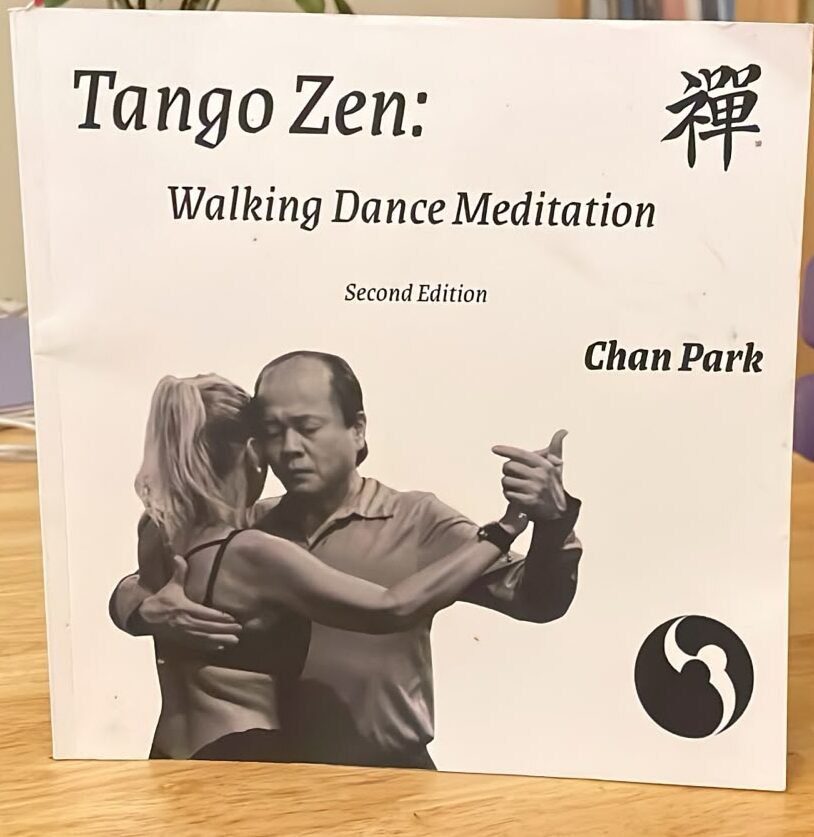
This book was highly anticipated as the first edition sold out years ago. For me it didn’t disappoint however it is a really different book than the first edition, at first glance the 2nd edition is more philosophical whilst the 1st edition was more practical. However, I will go into deeper detail into the differences below. First of all what this book isn’t: a religious book or a how to guide. For me it is a set of principles and filosophical ideas how to experience tango whilst staying in the moment or in the here and now.
First of all, this 2nd edition was long anticipated amongst our dancers at Tango E14 as most dancers have read the first edition or seen it and they were very enthusiastic only the find out it was sold out! At Tango E14 the founder Tony Lane most important aim is the connection between the two dancers, between you and the music and between you and the other couples. I would add the connection with yourself, your body, mind and soul as well engaging your centre or core and connecting yourself with the floor (grounding).
I arrived 6/7 years later at Tango E14and joined Tony in the running for the tango sessions. I brought technical aspects of tango dancing as well as being a somatic approach and my experience as a dance improvisation as performance artist. I understand Tony’s insistence and importance of the energy and communication between yourself and other dancers has to be genuine and authentic in order to be meaningful and grounded. No performance, just expression of feeling.
For those that don’t know, Tango is rooted in South American culture mainly originally from de Rio del Plata region. It is an improvised dance initially danced on the street.
The essence of Tango lies in this subtle communication- silent, physical and deeply emotional. It demands presence, trust, and the willingness to surrender to something shared. Each walk is an expression of now.
Tango E14 is teaching that, hence our enthusiasm and feelings of acknowledgment and recognition of the principles set out by Chan Park in Tango Zen.
Now back to the book; compared to the 1st edition it is bigger and easier to hold and with bigger font also easier to read. However, it makes it less easy to squish in an already full bag and transportable, however it is still ok. Overall, the content describes clearly in my opinion what Zen is and how it could manifest in movement and in specific Tango dance.
I love the drawings they are inspirational, a shame there is no name of the illustrator or titles of the works neither an index at the back of all the pictures, drawings, characters and calligraphy. As I for one would be every interested in that. The quotes are a mix of dance and zen practice. They referred to material and or sourced material is very educational. The images and the quotes really express what is discussed in the body of the text and inspire and enhance your understanding.
When I did my dance teacher training our main trainer/ teacher said; “You do not make people dance, you show them the path they could take, encourage them. Shine a light on the journey they could take to get there.” by Lorna Sanders.
This really resonated with me and very much so for Tango. I feel if you just copy the moves then you perhaps you might dance. However, if you feel and embody your feelings and express something of yourself whilst dancing. Then it becomes meaningful and we can all feel it is Argentine Tango and your dancing will make people move inside and inspire them.
Chan Park expresses beautifully what principles and guidance to follow to be authentic, meaningful and connected to your inner workings as well as your partner and how you possibly can get your Tango to that state of walking meditation.
I fully feel and embrace how Chan has described the 13 points in which you get guided to Tango Zen or Zen philosophy translated into Tango guidelines. I will give a few here however for all 13 please read the book. Here are 6 points from the book:
The Right Posture, the Right State of Mind.
Dance Here Now.
Releasing the Ego.
Confidence: Absence of Self- Consciousness.
Experience, Not Philosophy.
Beginner’s Mind.
The exercises in the book are really useful and have a clear, useful and effective progression. The videos are a bonus, however I still miss pictures either drawings of photographs would be useful for when you don’t want or are not able to look at a screen.
My favourite quotes:
You are not leading. You are offering. You are not following. You are listening